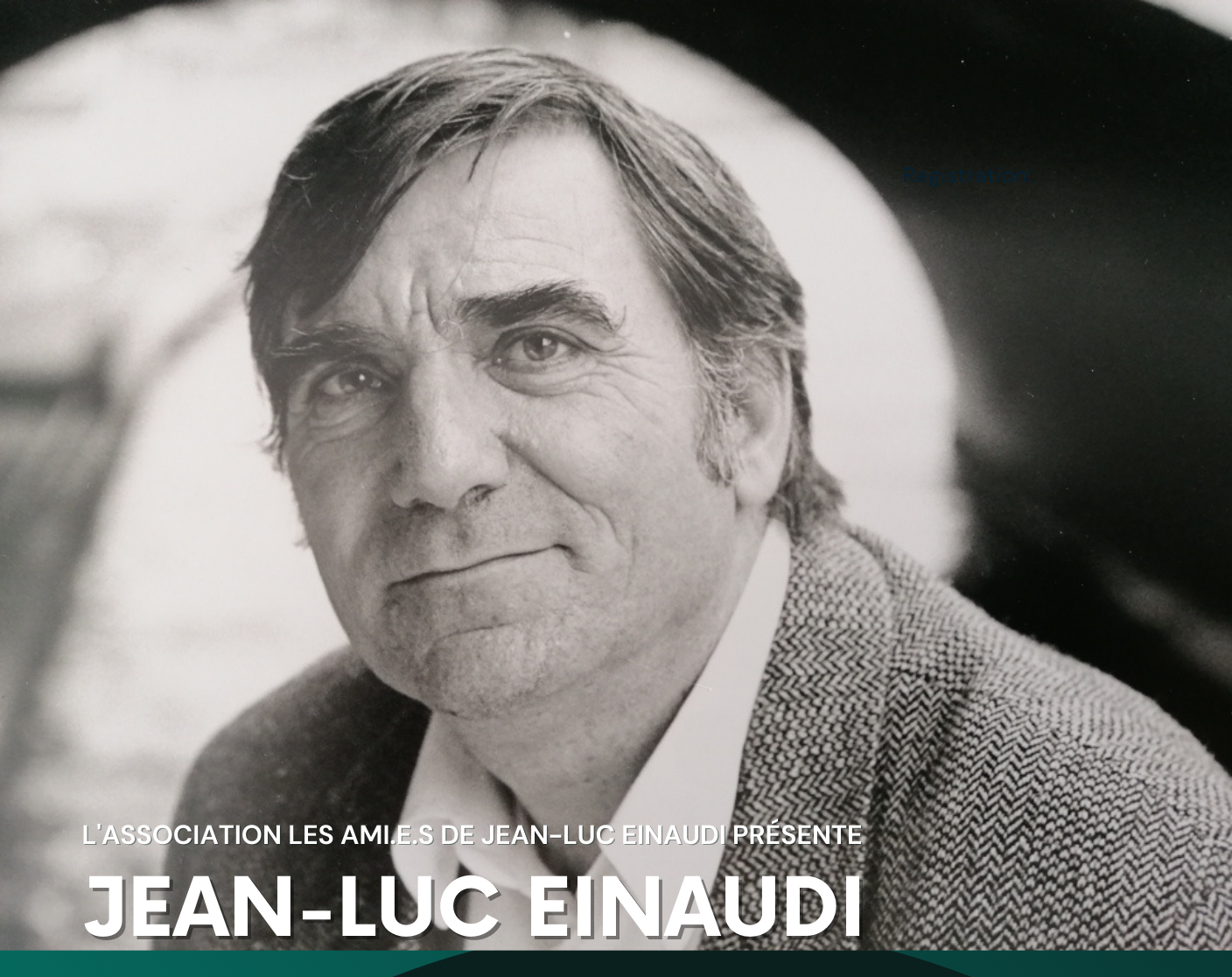

Archives de Jean-Luc Einaudi
1997 - France Inter Là-bas si j'y suis - Interview with J.-L. Einaudi about the events of October 17
1997 - France Inter Là-bas si j'y suis - Interview with J.-L. Einaudi about the events of October 17
France Inter – Là-bas si j'y suis. Date: October 17, 1997. Journalist/Presenter: Daniel Mermet
Content: Testimonies from witnesses and victims of October 17, 1961 / Interview with J.-L. Einaudi about the events of October 17
The historical facts, the mechanisms of police repression, the role of the political authorities of the time and the poignant accounts of survivors and direct witnesses.
1. Historical Context and Triggering of the Demonstration
In October 1961, the Algerian War was drawing to a close, but tensions in mainland France were at their peak. The FLN (National Liberation Front) Federation of France was then a powerful organization, overseeing approximately 400,000 Algerians in France, including 120,000 in the Paris region.
The discriminatory curfew
On October 5, 1961, a curfew was imposed by the government (Maurice Papon, Prefect of Police, and Roger Frey, Minister of the Interior). Although phrased as an "urgent recommendation," it effectively prohibited "Muslim French citizens of Algeria" from moving about between 8:30 p.m. and 5:30 a.m. This measure, which violated constitutional principles, paralyzed the social and economic life of the Algerian community.
The call to demonstrate
In response to the curfew and the increasing repression (arrests, beatings), the FLN's federal committee decided to organize peaceful demonstrations for three days. The aim was to protest the curfew and reaffirm support for the GPRA (Provisional Government of the Algerian Republic). On October 17, between 20,000 and 25,000 Algerians converged on key locations in Paris and its suburbs (Pont de Neuilly, Pont Saint-Michel, Grands Boulevards).
2. The Mechanics of Repression: A System of State Violence
The document highlights a systemic repression orchestrated by the police prefecture, under the direction of Maurice Papon.
Institutionalized torture in Paris
From 1960 onwards, on the decision of Michel Debré, torture was practiced in Paris. The "Auxiliary Police Force", composed of Algerian auxiliaries (Harkis) supervised by French officers, was created specifically to obtain information through violence.
• Places of detention and torture: Requisitioned hotels (particularly in the 13th and 18th arrondissements, as well as in Aubervilliers) and the cellars of some police stations are being used as interrogation centers.
• Methods: Hangings in the woods, strangulations, drownings and summary murders. Bodies were regularly found in the Seine or in suburban ditches even before October 17th.
The outbreak of violence on October 17
The evening of October 17th marked a climax. Law enforcement (police, riot police, gendarmerie) used extreme violence against unarmed protesters.
• Massacres on the bridges: On the bridges of Saint-Michel, Neuilly and Argenteuil, demonstrators are beaten with rifle butts until unconscious before being thrown into the Seine, often with their hands and feet tied.
• Mass raids: More than 11,000 people were apprehended and taken to detention centers such as the Palais des Sports or the Pierre-de-Coubertin stadium, where the violence continued.
• Climate of hatred: The accounts describe police officers "drunk with blood", but also some civilian involvement (such as bus drivers helping to beat the protesters).
|
Key event data
|
Figures and details
|
|---|---|
|
Police Prefect
|
Maurice Papon
|
|
Minister of the Interior
|
Roger Frey
|
|
Official report (1961)
|
2 dead
|
|
Estimated toll according to historians/researchers
|
More than 200 dead (some say 237)
|
|
Number of arrests
|
Approximately 11,000
|
|
Victim Profile
|
Algerian workers, women, and sometimes children
|
3. Direct Testimonies and Survivor Accounts
The audio excerpts provide precise details about the brutality of the events.
• The survivor of the Argenteuil bridge: A woman recounts how she and her compatriot were arrested in Nanterre. She saw police officers beat her companion with their rifle butts before throwing him into the water. She herself was thrown into the Seine after being struck behind the ear with a rifle butt. She survived by hiding under some grass on the riverbank while the police threw stones at her with their headlights shining on her.
• The witness of the Saint-Michel bridge: A man, 17 years old at the time, described a protester "curled up" on the outer edge of the bridge, being beaten with rifle butts by five or six riot police officers. The officers struck his hands until he let go and fell "like a stone" into the river.
• The nurse from Nanterre hospital: She testifies to having seen Algerians leave "gay and joyful" to demonstrate, then return "terrified and frightened" after the massacre.
• Mohamed Houchir (FLN activist): He describes the blockade of the Neuilly bridge by the Harkis and the police. He recounts the fate of the demonstrators thrown into the water and the immediate media disinformation that acknowledged only two deaths.
4. Political Responsibilities and State Omerta
The program highlights the chain of command and the silence that followed the massacre.
Those in charge at the time
• Maurice Papon: Immediate head of the Paris police and the auxiliary force.
• Roger Frey: The Minister of the Interior, who denied any evidence of a massacre before Parliament.
• Michel Debré: Prime Minister, accused of having allowed the atrocities to happen.
• Charles de Gaulle: The President of the Republic, whose reported comment on the massacre was: "Unacceptable but secondary." He kept Papon in his position after the events.
Amnesia and denial
The massacre was followed by a long period of official silence, described as an "amnesia that is eating away at the country." Archives remained closed for decades, and amnesty laws linked to the Évian Accords prevented prosecutions. It was only with the work of historians like Jean-Luc Einaudi and the publication of books like The Battle of Paris that the truth has begun to emerge publicly.
5. Significant Quotes
The document preserves a record of powerful statements illustrating the horror and the quest for remembrance:
"The police then relentlessly attacked me until I fell to the ground. I knew then that I was going to drown. They grabbed me by my hands and feet and threw me overboard." A survivor.
"There were at least 200 men and women who were massacred that night by the French police. Those drowned by gunfire (NPB)." Daniel Mermel.
"Unacceptable but secondary." Attributed to General de Gaulle in the aftermath of October 17th.
"We have no right to forget. Not to incite hatred, but to make it known that a tragedy, a crime against humanity, was committed in the capital of a country that is among the most democratic." Mohamed Houchir.
"This is our miserable little pile of secrets. Is this the end of the opaque era, the end of state contempt?" An anonymous witness.
6. Conclusion: Towards the end of oblivion?
In 1997, at the time of this broadcast, the trial of Maurice Papon (for other offenses) and the commemorations of October 17th marked a break with the historical silence. The event was now presented not as a simple case of police brutality, but as a state crime covered up by national security. The witnesses' intention was clear: to transform this painful memory into civic awareness to prevent such atrocities from ever happening again.