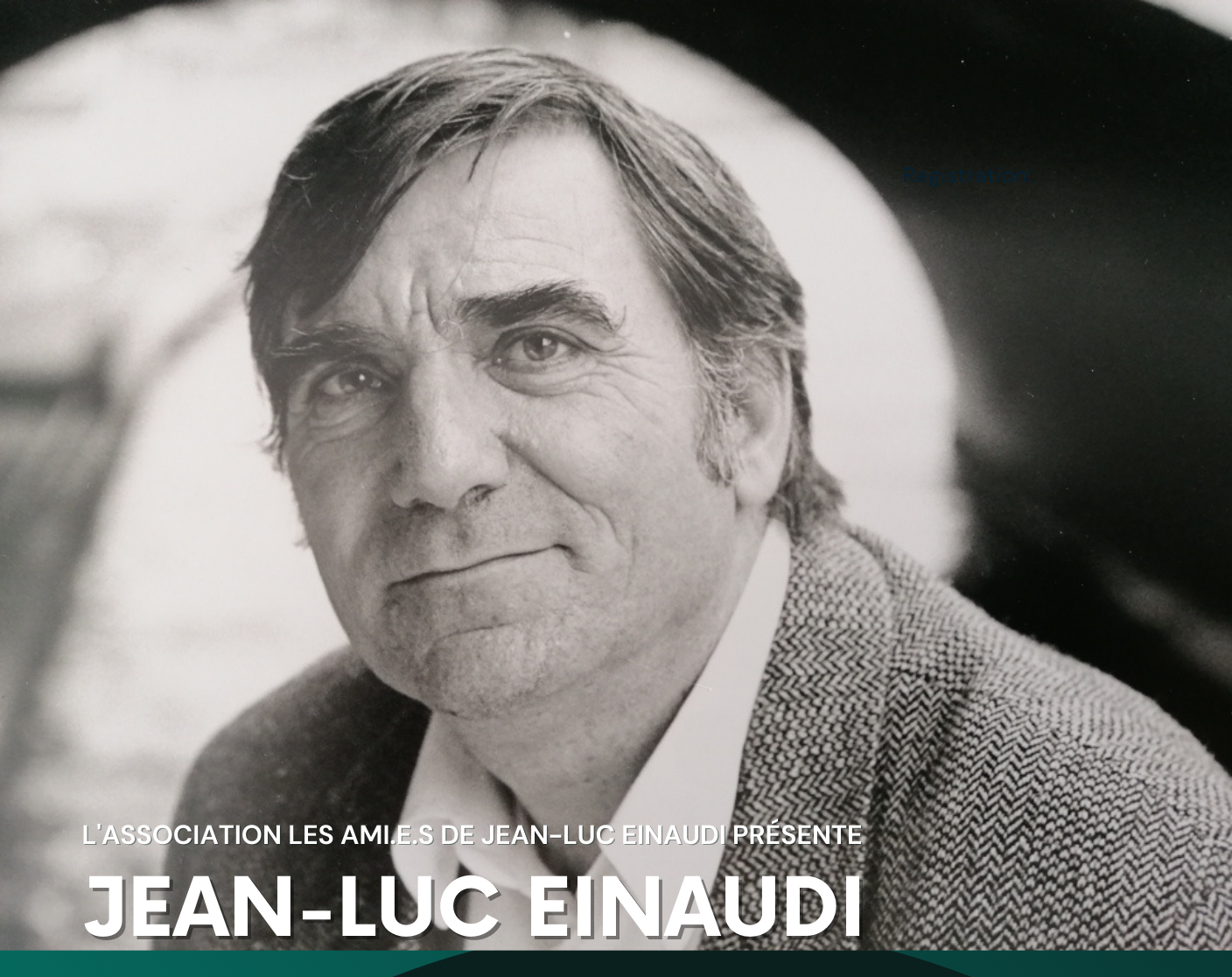

Archives de Jean-Luc Einaudi
1998 - Broadcast: The Opening of the Archives - France Culture, February 6, 1998
1998 - Broadcast: The Opening of the Archives - France Culture, February 6, 1998
France Culture – Staccato
- Date: February 6, 1998
- Program hosted by: Antoine Spire
- Theme: Opening up the archives / free access to the archives
Part 1:
- Context of preparing a new law on archives / Question of making access to archives more flexible.
- Guests:
- Paule René-Bazin, curator, in charge of the 20th century section at the National Archives
- Mireille Thibaut, civil administrator, assigned to the director of the National Archives
Part 2 – “On the Grill”:
- Problem accessing archives concerning October 17, 1961
- Guests: J.-L. Einaudi and Guy Pervillé, historian
Part 3:
Sonia Combe, researcher and historian: Presentation on the critical situation of archives in France.
This radio program, entitled "Staccato" and broadcast on France Culture on February 6, 1998, is devoted to the problem of access to public archives in France.
The debate examines the tension between the right to information and the French institutional "taste for secrecy," focusing on several key points:
1. The legislative framework and its restrictions
The debate revolves around the law of January 3, 1979, which governs the accessibility of documents in France. Although the standard period is 30 years, sources indicate that documents deemed sensitive are subject to much longer periods of access.
- 60 years for documents relating to national defense or state security.
- 100 years for legal files and private conduct.
- 120 to 150 years for personal, career or medical records.
The speakers compared this situation to the American Freedom of Information Act of 1966, which allows for much more regular declassification.
2. The complex role of archivists and government agencies
Archivists Paul René Basin and Mireille Thibault describe their role as that of mediators between researchers and the originating administrations (transmitting departments). A critical point is raised: the Director of the Archives of France cannot authorize consultation if the administration owning the document objects, placing the archives under direct pressure from political power.
3. Specific historical issues
The audio explores several cases where the locking of archives has hindered historical research:
On October 17, 1961, Jean-Luc Einaudi and Guy Pervillé debated the massacre of Algerians in Paris. Einaudi denounced the impossibility of accessing the archives of the Paris Police Prefecture, forcing historians to rely on testimonies or alternative sources. The controversy centered particularly on the estimated number of victims (approximately 200 according to Einaudi).
The Paul Touvier case: The exceptional opening of the private archives of the diocese of Lyon was necessary to shed light on the protections that this war criminal benefited from within the Church.
The Vichy regime: Lionel Jospin's circular (October 1997) is mentioned as an attempt to open the archives of the 1940-1945 period, but access remains difficult in practice.
4. Sonia Combe's radical critique
Historian Sonia Combe, author of Forbidden Archives, denounces a "critical situation" and a French fear of contemporary history. She argues that the notion of protecting privacy is often manipulated or used as a pretext to cover up the actions of civil servants, particularly those who served under Vichy. She also criticizes the system of exemptions, which she considers arbitrary and sometimes "elitist."
Finally, the program mentions the opening of the archives of the French Communist Party, which chose to align itself with the deadlines of the 1979 law to guarantee a certain transparency and avoid arbitrariness.