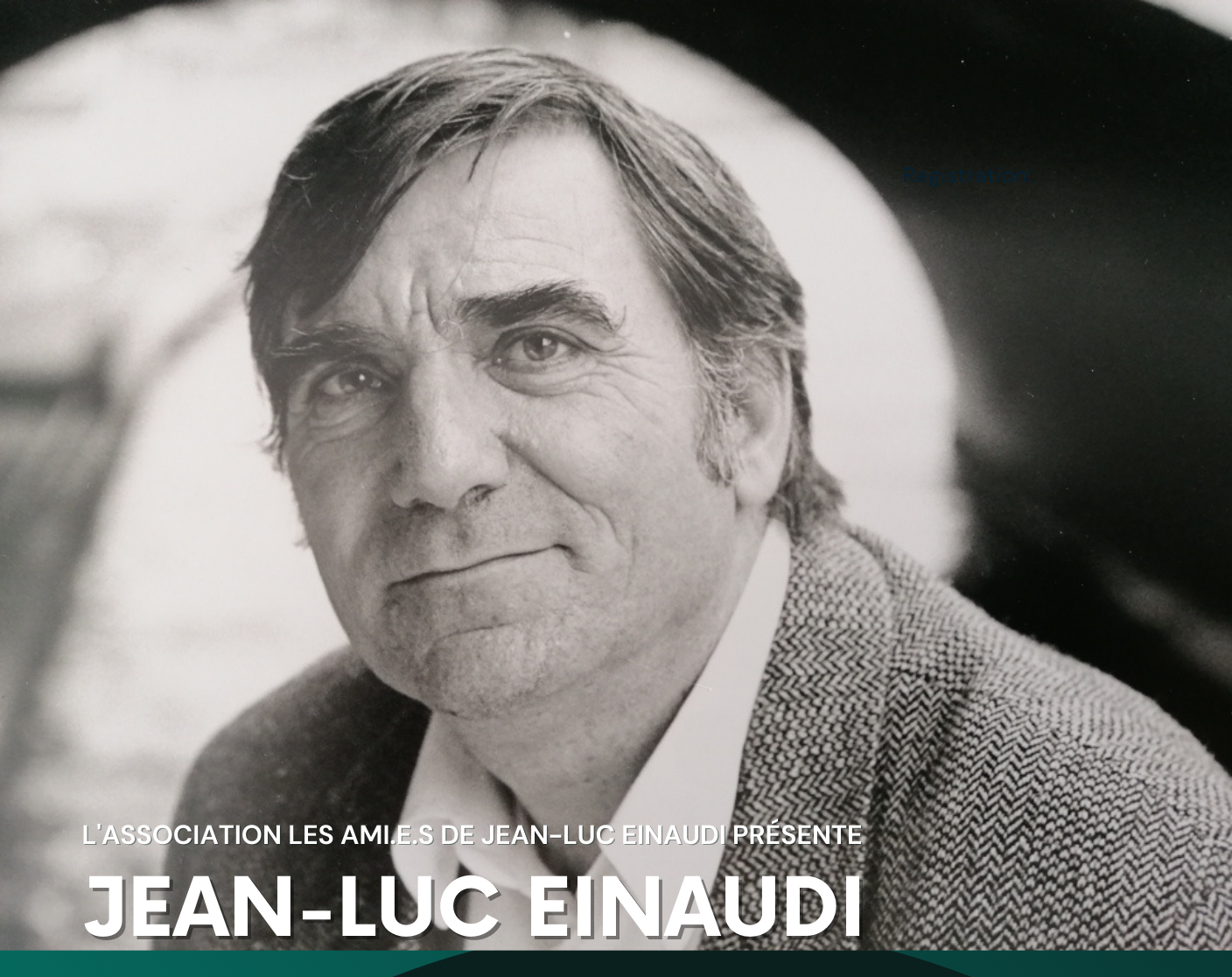

Archives de Jean-Luc Einaudi
2001 - Journal de France Culture: Torture practiced by the French army during the Algerian War
2001 - Journal de France Culture: Torture practiced by the French army during the Algerian War
France Culture Journal – May/June 2001. Radio France Culture. Context: Invited to talk about the torture practiced by the French army during the Algerian War, on the day of the publication of General Paul Aussares' book.
Duration of the topic: 7 minutes (Start of the topic at 3 minutes, end of the topic at 10 minutes)
A presentation by historian Jean-Luc Einaudi, author of * The Battle of Paris * and * Améziane Farm *, following the publication of General Paul Aussaresses' memoir. Einaudi's remarks shed historical and legal light on the practices of the French army and the political responsibilities during the Algerian War.
1. The Nature of General Aussaresses' Confessions
Jean-Luc Einaudi points out that while the use of torture is not a revelation in itself, General Aussaresses' work takes an unprecedented step by explicitly claiming criminal acts.
- Mass executions: Einaudi notes that the general is now claiming responsibility for "mass executions." He recalls that during the Battle of Algiers, more than 3,000 suspected Algerians disappeared, a figure initially recorded by Paulette Thévenin.
- The assassination of Larbi Ben M'hidi: The most striking element is Aussaresses' own admission of the murder of Larbi Ben M'hidi. Einaudi describes Ben M'hidi as the "equivalent of Jean Moulin" for the Algerian resistance. Until this confession, the official version of the French state maintained the theory of suicide.
2. The Debate on Legality and Ethics
The historian strongly opposes General Aussaresses' line of defense, which justifies his actions by "duty" and the usefulness of the circumstances.
|
Aussaresses' point of view |
Analysis by Jean-Luc Einaudi |
|
Actions in accordance with military ethics in wartime. |
Torture was "outlawed" in 1956-1957. |
|
Personal responsibility assumed because it was deemed "useful". |
A clandestine, institutionalized practice. |
|
A feeling of having fulfilled one's duty. |
The demand was deemed "abject" and criminally punishable. |
Einaudi insists that torture has always been a crime, yesterday as today. He considers the attempt to "legitimize" these crimes in 2001 to be particularly serious.
3. The Responsibility of the Political Apparatus
According to Jean-Luc Einaudi, the military did not act in isolation. He points to a "total" responsibility on the part of the political authorities at the time.
- François Mitterrand's role: As Keeper of the Seals (Minister of Justice), François Mitterrand is described as having been fully informed. Einaudi specifies that the government directives, which included "special powers" delegating police missions to the army (notably to General Massu's paratroopers), bore his signature.
- Judicial initiatives: It is recalled that Mitterrand, as Minister of Justice, took the initiative of the first executions of Algerian fighters sentenced to death in June 1956.
-
Other officials cited: Responsibility is shared by the highest levels of the state at the time, including:
- Robert Lacoste (Minister residing in Algeria)
- Max Lejeune
- Maurice Bourgès-Maunoury
- Guy Mollet
4. Recommendations and Requirements for the Future
In response to these admissions, Jean-Luc Einaudi advocates several measures to break with what he calls a "state lie".
Legal Proceedings
Einaudi believes that a former general's claim of criminal practices in 2001 falls under the law and should be subject to immediate criminal prosecution.
Position of the Current Authorities
The historian considers it "essential" that the highest authorities of the State (the President of the Republic and the Prime Minister):
- They officially comment on these revelations.
- They clearly condemn these crimes committed in the name of the French state.
Search for Truth
He supports the idea of creating a parliamentary commission of inquiry . For Einaudi, any mechanism enabling the establishment of the truth about these "state crimes" must be implemented in order to put an end to a cover-up that has lasted for several decades.