
Archives de Jean-Luc Einaudi
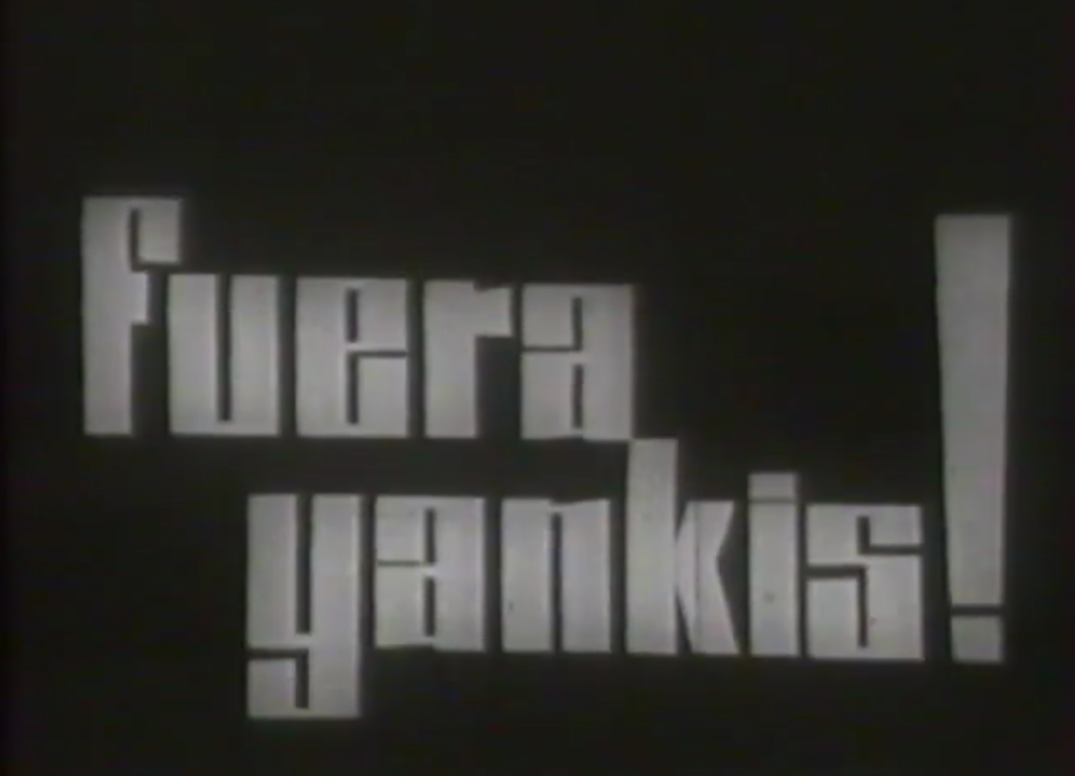
1966 - Fuera Yankis! by George Mattei, Santo Domingo, duration 37 minutes
1966 - Fuera Yankis! by George Mattei, Santo Domingo, duration 37 minutes
Full version of the film Fuera Yankis! by George Mattei, Santo Domingo, 1966, duration 37 minutes
Crisis and Elections in the Dominican Republic (1961-1966): From the Constitutionalist Revolution to the Occupation
The major political and military events that occurred in the Dominican Republic between the assassination of dictator Trujillo in 1961 and the controversial elections of June 1966. It is based on testimonies and factual data from the documentary context provided.
1. Historical Context: From Dictatorship to Fragile Democracy (1961-1963)
The recent history of the Dominican Republic is marked by a violent transition after three decades of autocratic rule.
• The post-Trujillo era (1961): After the assassination of dictator Trujillo (nicknamed the "bfa"), Joaquín Balaguer, former advisor and spokesman for the regime, was chosen by the CIA to ensure the succession in order to maintain the status quo.
• The Democratic Interlude (1962): In 1962, the Dominican people expressed a desire for radical change. Juan Bosch, leader of the Dominican Revolutionary Party (PRD), won the presidency by universal suffrage after 30 years of a bloody dictatorship. This period marked a brief era of freedom and independence.
• The coup d'état (1963): Juan Bosch is overthrown by a military triumvirate, described as the spiritual heir of Trujillo, which reinstates the previous methods of repression.
2. The April 1965 Uprising and Foreign Intervention
On April 24, 1965, a revolt broke out to restore constitutional order.
The Constitutionalist Movement
A group of young officers, led by Colonels Caamaño and La Chapelle, decided to reinstate the 1963 Constitution and Bosch's legitimate government. They distributed weapons to the people, and left-wing organizations joined the movement.
The United States Intervention
Under the pretext of ensuring the safety of some forty North American residents, President Lyndon B. Johnson ordered a military intervention. The political reality, as expressed by Johnson himself, was to prevent "the establishment of another communist government" in the hemisphere, citing the Cuban experience as a precedent not to be repeated.
Summary of the Intervention
• Forces involved: 8,000 North American and Brazilian soldiers form an "Inter-American Peace Force".
• Tactics: Bombings, strafing of civilian populations, summary executions and political terror.
• Military headquarters: Constitutionalist forces found themselves isolated in the capital, particularly in the Santa Barbara area and around Camp 27 February. This camp was literally surrounded by the 504th United States Infantry Battalion, national armored units, and the national police.
3. The Elections of June 1, 1966
The 1966 election took place in an atmosphere of extreme tension, under foreign military occupation.
The Leading Candidates
|
Candidate
|
Party / Affiliation
|
Positioning
|
|---|---|---|
|
Joaquín Balaguer
|
Reform Party (“El Gallo Colorado”)
|
Backed by the CIA and the Church; presented as the "peace" candidate.
|
|
Juan Bosch
|
PRD
|
Constitutionalist leader; targeted by a Church smear campaign linking him to the "devil".
|
A Questionable Electoral Process
The voting system in place facilitated irregularities:
• No electoral list was required.
• The identification process involved dipping a finger in red ink and having a few hairs shaved off the forearm. However, the ink washed off easily, and not all voters were "hairy".
• Balaguer secured the right for women to vote without identification and anywhere.
4. Analysis of Results and Fraud Allegations
On June 2, 1966, the results announced Balaguer's victory.
• Official figures: Balaguer obtained 754,409 votes against 517,784 for Bosch.
• Evidence of fraud: The document reports numerous blatant irregularities:
◦ Stolen ballot boxes found sealed or ripped open in vacant lots.
◦ Ballot papers thrown in the gutters.
◦ Assassinations of polling station officials.
◦ Obvious mathematical errors in some localities such as Barahona (where the number of votes allocated to alternates did not correspond to the main votes).
5. Social Climate and Reactions
In contrast to the euphoria of Bosch's victory in 1962, Balaguer's triumph in 1966 was met with a heavy silence.
• Popular reaction: The population, struck with astonishment, showed no joy. The atmosphere was described as that of a country "in mourning".
• The role of the Church: The ecclesiastical institution, described as "the most reactionary in Latin America", openly rejoiced at Bosch's defeat.
• Fighters' perspectives: The survivors of the Constitutionalist army saw their revolution crushed by the OAS (Organization of American States), whose banner served to protect the return of authoritarian regimes and to restore Godoy's reactionary army.
In summary, the 1966 elections are presented as an operation to restore the old order, orchestrated under foreign military pressure and tainted by blatant but effective fraud, putting an end to the hope for sovereignty brought by the April 1965 movement.